




GP surgeries and dental practices are the front door of healthcare in Congleton. Between them, they see hundreds of patients every week, from routine check-ups and dental cleanings to managing chronic conditions and performing minor procedures. Most of the time, these appointments go smoothly. But every now and then, a patient deteriorates unexpectedly. A cardiac arrest in the waiting room. An anaphylactic reaction during a dental procedure. A patient who collapses after standing up too quickly. These events are rare, but they happen, and when they do, the first few minutes determine whether the patient lives or dies.
Basic Life Support training ensures that every member of your team, from the receptionist to the senior clinician, knows exactly what to do in those first critical minutes.
We are PCT Services, and we deliver Resuscitation Council UK accredited BLS training from our training centre at First Floor, 2 Queen Street in Northwich, about a 20 minute drive from Congleton. We also deliver on-site training at GP surgeries and dental practices across the area.
Why BLS is non-negotiable for primary care
For GP surgeries, the Care Quality Commission expects all clinical and non-clinical staff to receive regular BLS training. It forms part of your clinical governance framework, and inspectors will ask to see evidence that training is current. The Resuscitation Council UK recommends annual BLS refreshers for all healthcare staff, and the CQC expects practices to follow this guidance.
For dental practices, the General Dental Council is equally clear. Every member of the dental team must be trained in medical emergencies, including BLS, and that training must be kept up to date. The CQC inspects dental practices against these standards, and a lapsed BLS certificate is one of the most common findings that leads to improvement notices.
This is not about ticking boxes. A cardiac arrest can happen at any point during the day. It could be a patient in the chair, a patient in the waiting room, a colleague, or a delivery driver. The person closest to them when it happens is the person who needs to act. If that person is the dental nurse, the receptionist, or the practice manager, they need BLS skills just as much as the dentist or GP does.
What BLS training covers
Our BLS course follows the latest Resuscitation Council UK guidelines and covers the complete chain of survival. You will learn how to recognise cardiac arrest quickly and accurately. You will practise high-quality chest compressions on manikins with real-time feedback that shows whether your depth, rate, and recoil are correct. You will learn rescue breathing techniques including bag-valve-mask ventilation. You will practise using an automated external defibrillator, including the specific considerations for using one in a clinical setting. And you will learn how to manage choking in adults.
The course lasts two hours, which means it can fit into a lunchtime or an afternoon without shutting down your practice for the whole day. It is entirely practical. There is no written exam, no lengthy theory session. You spend the time practising the skills that could save a life, over and over, until they are automatic.
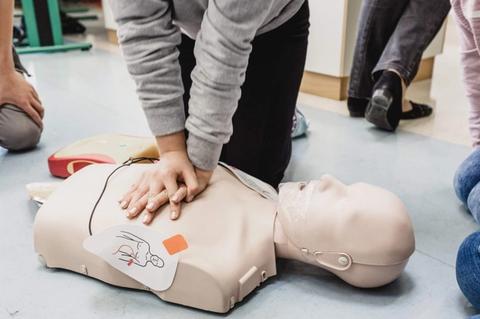
Basic Life Support Training (BLS) CPD Accredited
This Basic Life Support is ideal for healthcare professionals who require Level 2 Resuscitation Core Skills Training Framework (CSTF). This CPD accredited course provides essential knowledge and practical skills to competently recognise a cardiac arrest and commence basic life support in adults, children and infants. It also covers safe application of an AED (Automatic External Defibrillator), how to use a Bag-Valve-Mask (BVM), administration of oxygen, and the initial assessment and management of anaphylaxis and choking.
Northwich Training Centre, Northwich
4 spots left · 3 dates available
Making it work for your Congleton practice
For GP surgeries and dental practices in Congleton, there are two practical ways to arrange BLS training.
The first is on-site delivery. We come to your practice, set up in your staff room or a treatment room, and train your team in batches so that the practice can keep running. For a dental practice with six staff, we might train three in the morning and three in the afternoon. For a GP surgery with a larger team, we can arrange multiple sessions across a day or across two days. The advantage of on-site training is that nobody has to travel, you can train around your clinic schedule, and we can reference your actual AED location and emergency procedures during the course.
The second option is for individuals or small groups to attend a scheduled course at our training centre at First Floor, 2 Queen Street in Northwich. This works well for locum staff, new starters, or practices that only have one or two people whose certificates are due for renewal. The centre is about a 20 minute drive from Congleton, and we run BLS courses regularly throughout the year.
Annual refresher, not a one-off
BLS is a perishable skill. Research consistently shows that CPR quality declines within months of training if the skills are not practised. That is why the Resuscitation Council UK recommends annual refreshers, and it is why the CQC and GDC expect to see current training records.
The most effective Congleton practices we work with build BLS into their annual training calendar. They pick a month, book the training, and make it a non-negotiable part of the practice year. Some combine it with other mandatory training to create a full CPD day. Others run a quick two hour session at the start or end of a working day.
The key is consistency. If you wait until someone asks to see your certificates, you are already behind.
Beyond BLS: when your team needs more
For clinical staff in GP surgeries who may need to manage a deteriorating patient with more than just CPR and an AED, we also offer enhanced Immediate Life Support training. eILS covers airway management, bag-valve-mask ventilation, recognition of peri-arrest arrhythmias, and a structured approach to the acutely unwell patient. It costs £180 per person and is a full day course combining e-learning with practical scenarios.
For most Congleton dental practices, BLS is sufficient for the whole team. For GP surgeries, a combination of BLS for all staff and eILS for the clinical team provides the layered competence that best protects patients.
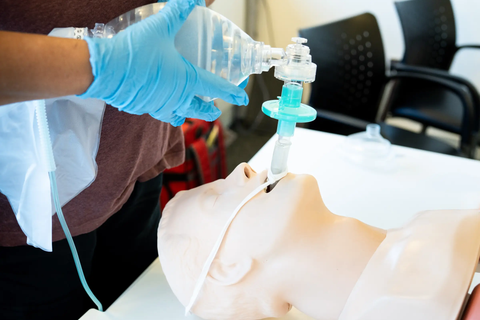
Immediate Life Support Training (eILS)
The Immediate Life Support course is a specialised course designed to equip healthcare professionals with a variety of skills, from managing a deteriorating adult, identifying causes of deterioration and treating cardiorespiratory arrest in adults, to developing team leadership skills and understanding what it takes to be an effective team member in an emergency.
Northwich Training Centre, Northwich
Fully booked
Book your training
Check the upcoming dates on our Basic Life Support page and book your team's places. Or give us a call on 07958 915146 to arrange on-site training at your Congleton practice. Your patients trust you with their health. BLS training makes sure you can deliver on that trust when it matters most.
Topics

Written by
Founder
- Registered Nurse / Specialist Practitioner Emergency Care
- Advanced Paediatric Life Support Instructor
- Immediate Life Support Instructor
- Independent Non Medical Prescriber
- Post Graduate Certificate in Education
I have practiced as a registered nurse for over 34 years, 29 within a senior nursing position within Emergency Care and as a part time lecturer at the University of Manchester. I am a Resuscitation Council (UK) and Advanced Life Support Group Instructor for Advanced Paediatric…
Read more about Jennie

