















Schools have a unique first aid challenge. Your staff need to be able to respond to emergencies involving children, which requires paediatric-specific techniques. But they also need to be able to respond to emergencies involving adults, whether that is a colleague, a parent at the school gates, a visitor, or a contractor on site. That means your school ideally needs staff with both workplace first aid and paediatric first aid skills.
Traditionally, that has meant two separate courses, two separate days out of school, and two separate costs. Our Combined EFAW and Paediatric First Aid course solves that problem by delivering both qualifications in a single training package. For Sandbach schools, it is the smartest and most cost-effective way to build a team that is ready for any emergency involving anyone.
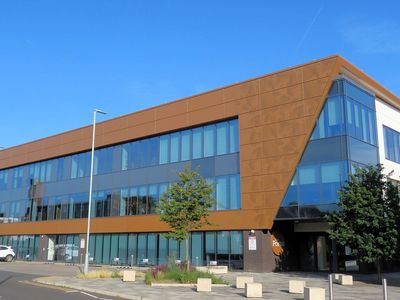
We are PCT Services, and we deliver Qualsafe Awards accredited first aid training from our training centre at First Floor, 2 Queen Street in Northwich, about a 20 minute drive from Sandbach. We also deliver on-site training at schools across the area.
The problem with single-qualification training
If your teaching assistant completes a Paediatric First Aid course, they are trained to deal with emergencies involving children. CPR for infants and children, choking in babies, febrile convulsions, childhood illnesses and injuries. But if a parent has a cardiac arrest at the school gates or a colleague collapses in the staff room, the techniques are different. Adult CPR uses different hand positions and compression depths. Choking management for adults involves abdominal thrusts rather than the back blows and chest thrusts used for infants.
If your teaching assistant completes an Emergency First Aid at Work course instead, they are trained for adult emergencies but may not be confident managing a choking infant, a child with a febrile convulsion, or a baby who stops breathing.
Schools need both skill sets, and the combined course delivers them together.
What the combined course covers
The Combined EFAW and Paediatric First Aid course covers all the content from both qualifications in an integrated format. This means your staff learn adult and paediatric techniques side by side, understanding the differences and the similarities.
For adults, the course covers CPR with an AED, choking management using abdominal thrusts, serious bleeding, burns and scalds, shock, and unresponsiveness. For children and infants, it covers infant and child CPR, choking in babies using back blows and chest thrusts and in young children using back blows and abdominal thrusts, febrile convulsions, allergic reactions and anaphylaxis, meningitis recognition, and the other paediatric emergencies that are specific to young children.
The course is Qualsafe Awards accredited, starts from £95 plus VAT per person, and the certificate is valid for three years. Groups can be up to 12.
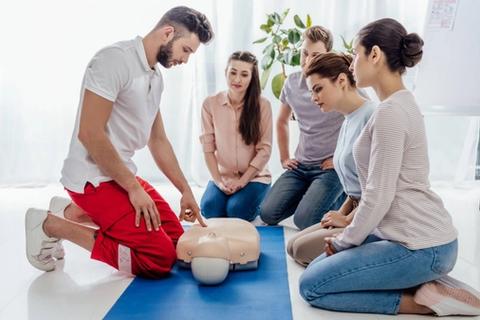
Combined Emergency First Aid at Work and Emergency Paediatric First Aid
This combined Qualsafe Level 3 Award in Emergency First Aid at Work (RQF) and Emergency Paediatric First Aid (RQF) is a regulated and nationally recognised qualification and is HSE and OFSTED compliant. Your trainer is a Registered Nurse with years of experience in Emergency Departments who trains Advanced Life and Advanced Paediatric Support to medical and nursing staff in acute hospital environments.
Northwich Training Centre, Northwich
Fully booked · 4 dates available
Why this matters for Sandbach schools
Think about the range of people on your school site on any given day. Children from reception age through to Year 6 or Year 11. Teaching staff. Support staff. Parents and grandparents at drop-off and pick-up. Volunteers. Peripatetic teachers. Contractors and maintenance workers. Delivery drivers. Every one of these people could have a medical emergency on your premises.
A combined-trained member of staff can respond to all of them. They do not need to stop and think about whether the technique they learned applies to the person in front of them. They have practised both adult and paediatric skills, and they can adapt their response to whoever needs help.
For Sandbach primary schools with EYFS classes, this is particularly valuable. The EYFS framework requires at least one person trained in paediatric first aid to be present at all times when children under five are present. Staff who hold the combined qualification meet this requirement while also being equipped to deal with adult emergencies elsewhere in the school.
Who should do the combined course?
The combined course is ideal for teaching assistants and learning support assistants who work across different year groups and different parts of the school. They are often the staff who are closest to children during lessons, playtime, and lunchtimes, and they are also the staff who may be first on the scene for an adult emergency.
Lunchtime supervisors and playground staff benefit from the combined course because break times are when many injuries occur, and the people present could be children, staff, or visiting parents.
PE teachers and sports coaches who work with children of all ages and also supervise adult volunteers or parent helpers on sports days and fixtures would benefit from dual competence.
School office staff and receptionists are often the first point of contact for emergencies involving visitors and parents, while also being called upon for children who are ill or injured during the school day.
Building a training plan for your school
The most effective approach for Sandbach schools is to have a core group of staff who hold the combined qualification. These are your flexible responders who can deal with any emergency involving anyone. On top of that, your designated EYFS first aider should hold the full two day Paediatric First Aid qualification to meet the EYFS requirements with the most comprehensive level of training.
We recommend training at least three or four staff members across different year groups and different parts of the school, so that a trained adult is always nearby. Stagger the training dates so that all certificates do not expire at the same time.
On-site training for your school
For Sandbach schools, on-site training is often the most practical choice. We come to your school on an inset day or a training day, set up in the hall or a large classroom, and train your staff group. This means no travel costs, no cover needed for staff to attend off-site, and the ability to discuss your school's specific layout, equipment, and emergency procedures during the course.
We can train up to 12 staff in a single session, which is enough for most primary schools to cover their key first aid team.
Or attend at our Northwich centre
For individual staff members who need training between inset days, our scheduled courses at First Floor, 2 Queen Street in Northwich run throughout the year. Check the live dates on our Combined EFAW and Paediatric page.
The centre is about a 20 minute drive from Sandbach and provides a focused, professional training environment.
Book your training
If you are a headteacher, school business manager, or EYFS lead at a Sandbach school, check the upcoming dates on our course pages or give us a call on 07958 915146 to discuss on-site training for your staff. The combined course is the most efficient way to build a first aid team that is ready for anything, whoever needs help.
Topics

Written by
Founder
- Registered Nurse / Specialist Practitioner Emergency Care
- Advanced Paediatric Life Support Instructor
- Immediate Life Support Instructor
- Independent Non Medical Prescriber
- Post Graduate Certificate in Education
I have practiced as a registered nurse for over 34 years, 29 within a senior nursing position within Emergency Care and as a part time lecturer at the University of Manchester. I am a Resuscitation Council (UK) and Advanced Life Support Group Instructor for Advanced Paediatric…
Read more about Jennie

