























Finding an adult unresponsive is a stressful situation. However, knowing what to do in those critical first moments can dramatically increase their chances of survival. This guide walks you through the immediate actions you need to take if you encounter this emergency.
Assess the Situation
Check for Responsiveness
Shout their name loudly and tap their shoulder. Ask, "Are you okay?" If there is no response, immediately call 999 and tell the dispatcher you have an unresponsive adult.
Check for Breathing
Open the Airway
Gently tilt their head back and lift their chin. This can help open the airway if the tongue is blocking it.
Look, Listen, and Feel for Breathing
Place your ear near their mouth and nose. Look for chest movement and listen for breath sounds. Feel for breath on your cheek for no more than 10 seconds.
If the Person Is Not Breathing
Start CPR (Cardiopulmonary Resuscitation)
If you are trained in CPR, begin chest compressions and rescue breaths. If you are not trained, the dispatcher can guide you through hands-only CPR, which involves continuous chest compressions without rescue breaths.
Chest Compressions
Place the heel of one hand in the centre of their chest, on the lower half of the breastbone. Place your other hand on top of the first and interlock your fingers. Keep your arms straight and position your shoulders directly above your hands. Push down hard and fast, compressing the chest about 2 inches. Aim for a rate of 100 to 120 compressions per minute.
Use an AED (Automated External Defibrillator)
If an AED is available, use it as soon as possible. These devices can analyse the heart rhythm and deliver a shock if needed to restore a normal heartbeat.
If the Person Is Breathing
Place Them in the Recovery Position
Roll them onto their side, supporting their head and neck. This helps keep their airway open and allows any fluids to drain from their mouth. Continue to monitor their breathing until emergency services arrive.
Key Reminders
Do not be afraid to ask for help. If someone else is nearby, ask them to call 999 and find an AED. Stay calm and follow the instructions of the dispatcher. They can guide you through the necessary steps. Remember, any attempt at CPR is better than none. Your actions can make a significant difference in the person's chances of survival.
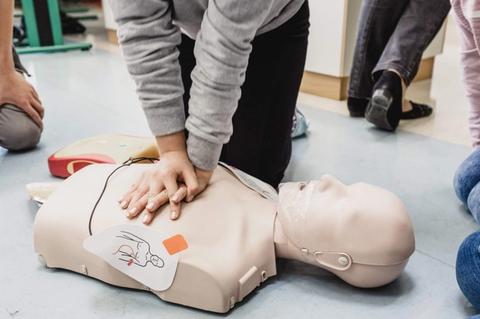
Basic Life Support Training (BLS) CPD Accredited
This Basic Life Support is ideal for healthcare professionals who require Level 2 Resuscitation Core Skills Training Framework (CSTF). This CPD accredited course provides essential knowledge and practical skills to competently recognise a cardiac arrest and commence basic life support in adults, children and infants. It also covers safe application of an AED (Automatic External Defibrillator), how to use a Bag-Valve-Mask (BVM), administration of oxygen, and the initial assessment and management of anaphylaxis and choking.
Northwich Training Centre, Northwich
4 spots left · 3 dates available
Disclaimer
This article is intended as general guidance only and should not be used as a substitute for accredited training. Always follow the latest protocols from the Resuscitation Council UK, NHS England, and other relevant professional bodies. For up-to-date training and certification, please refer to CPD-accredited courses delivered by qualified providers.
Topics

Written by
Founder
- Registered Nurse / Specialist Practitioner Emergency Care
- Advanced Paediatric Life Support Instructor
- Immediate Life Support Instructor
- Independent Non Medical Prescriber
- Post Graduate Certificate in Education
I have practiced as a registered nurse for over 34 years, 29 within a senior nursing position within Emergency Care and as a part time lecturer at the University of Manchester. I am a Resuscitation Council (UK) and Advanced Life Support Group Instructor for Advanced Paediatric…
Read more about Jennie

