















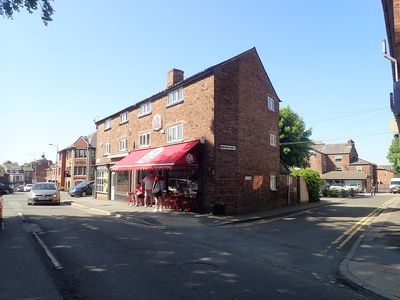


Most Middlewich businesses have a first aid kit somewhere on the premises. It was probably bought when the business started, hung on a wall in the kitchen or the back office, and has not been looked at properly since. If you opened it now, you might find plasters that have lost their sticky, bandages still in their wrappers, and a leaflet from 2019 telling you what to do in an emergency.
Having a first aid kit is a legal requirement. But having the right kit, in the right place, properly stocked and regularly checked, is what actually matters. This post explains what first aid equipment Middlewich businesses are required to have, what you should consider adding based on your specific risks, and how training ties it all together.
Free tool
How many first aiders do I need? Free first aid needs calculator
A free first aid needs calculator to work out how many first aiders your workplace needs, with plain English HSE guidance from our nurse trainer.
We are PCT Services, and we deliver Qualsafe Awards accredited first aid training from our training centre at First Floor, 2 Queen Street in Northwich, about a 5 minute drive from Middlewich. We also deliver on-site training at workplaces across the area.
What the law says about first aid equipment
The Health and Safety (First Aid) Regulations 1981 require every employer to provide adequate and appropriate first aid equipment. The accompanying guidance makes clear that the minimum provision is a suitably stocked first aid kit. What counts as suitably stocked depends on your workplace, your activities, and the number of people on site.
There is no single legally mandated list of contents for a workplace first aid kit. The HSE provides a suggested list for a standard low-risk workplace, but your kit should reflect the actual risks in your business. A Middlewich garage needs different equipment from a hair salon, which needs different equipment from a dental practice.
The standard workplace first aid kit
For most low-risk Middlewich businesses, offices, shops, salons, cafes, and small businesses, the standard first aid kit should include the following as a minimum.
A guidance leaflet on first aid. An individually wrapped sterile adhesive dressings (plasters) in assorted sizes, at least 20. Two sterile eye pads. Two individually wrapped triangular bandages, ideally sterile. Six safety pins. Two large sterile individually wrapped unmedicated wound dressings. Six medium-sized sterile individually wrapped unmedicated wound dressings. Two pairs of disposable gloves. Microporous tape. Shears (tough scissors). A resuscitation face shield.
This is a starting point. Depending on your business, you may need more, or you may need additional specialist items.
Additional equipment based on your risks
If your business involves burns risks
Kitchens, cafes, restaurants, salons (hair straighteners, curling tongs, steamers), and any workplace with hot surfaces or liquids should have additional burns dressings. Sterile burns dressings or cling film for covering burns are essential. A supply of cool running water is important, and if your workplace does not have easy access to running water, you should consider sterile saline solution for cooling burns in an emergency.
If your business involves eye hazards
Garages, workshops, laboratories, and any workplace where foreign bodies or chemicals could enter the eye should have an eye wash station. This is typically a sealed bottle of sterile saline that can be used to irrigate the eye. The bottles have a limited shelf life, so check and replace them regularly.
If your business involves serious bleeding risks
Butchers, garages, manufacturing businesses, and any workplace with sharp tools, machinery, or heavy equipment should have additional large wound dressings and haemostatic dressings. A tourniquet is recommended for workplaces where catastrophic bleeding is a realistic possibility.
If you have an AED
An automated external defibrillator is not a legal requirement for most businesses, but it is increasingly common and strongly recommended. If your Middlewich business has an AED, make sure it is visible, accessible, and that all staff know where it is. AEDs require minimal maintenance but do need regular checks to ensure the battery is charged and the pads are in date.
Where to put your first aid equipment
Location matters as much as content. Your first aid kit should be easily accessible and clearly marked with a white cross on a green background. It should not be locked in a cupboard, stored behind boxes in a stockroom, or kept in a location that is only accessible to one person.
If your Middlewich business covers a large area or has multiple floors, you may need more than one first aid kit. The test is simple: can any member of staff reach a first aid kit within a minute or two from anywhere in the workplace? If the answer is no, you need additional kits.
If your staff work off-site, travel regularly, or drive company vehicles, consider providing personal first aid kits for their cars or bags. A small travel kit with plasters, dressings, wipes, and gloves takes up no space and can be invaluable.
Checking and restocking
A first aid kit that is not maintained is a first aid kit that will let you down when you need it. Items get used and not replaced. Plasters lose their adhesive. Sterile dressings pass their expiry dates. Eye wash solutions expire.
Check your first aid kit at least every three months. Replace anything that has been used, is damaged, or has expired. Keep a simple checklist inside the kit so that whoever checks it can see at a glance whether everything is present and in date.
Assign someone in your business the responsibility of maintaining the first aid kit. This is often the designated first aider, but it can be anyone who is reliable and organised.
Equipment without training is not enough
A perfectly stocked first aid kit is useless if nobody knows how to use it. A triangular bandage is just a piece of cloth unless someone knows how to apply a sling. An AED is just a box on the wall unless someone knows how to attach the pads and follow the prompts. Sterile dressings are just packets unless someone knows how to control bleeding and apply pressure.
First aid training brings the equipment to life. It teaches your designated first aider how to use everything in the kit confidently and effectively. It also teaches them when to use it, because knowing what not to do is just as important as knowing what to do.
Emergency First Aid at Work (1 Day) costs £75 plus VAT per person, the certificate is valid for three years, and it covers CPR, choking, bleeding, burns, shock, and the other core emergencies. First Aid at Work (3 Day) costs £195 plus VAT per person and covers a broader range of injuries and illnesses.
Both courses are available at our training centre at First Floor, 2 Queen Street in Northwich, about a 5 minute drive from Middlewich, or on-site at your workplace for groups.
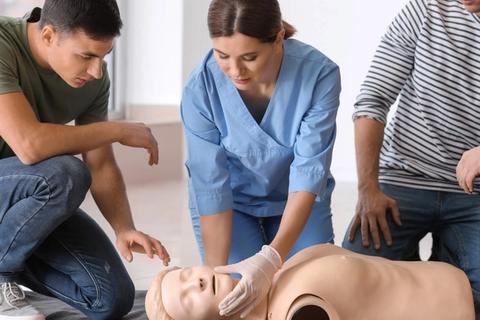
Emergency First Aid at Work
This 1 day Qualsafe accredited course provides comprehensive training designed to equip employees with essential first aid skills tailored for low risk working environments, ensuring employer compliance with the Health and Safety (First Aid) Regulations 1981. Your trainer is a Registered Nurse with many years of clinical experience within Emergency Departments who trains Advanced Life Support to medical and nursing staff in acute hospital environments. Group bookings from £60.00 per person.
Northwich Training Centre, Northwich
2 spots left · 5 dates available
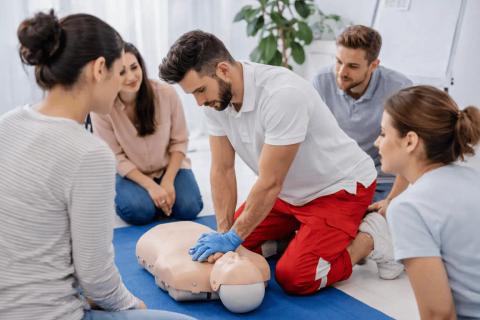
FAW Blended 3 Day Course
This 3 day blended Qualsafe accredited course — Day 1 completed online as e-Learning, Days 2 and 3 classroom based — provides comprehensive training designed to equip employees with essential first aid skills tailored for high risk working environments, ensuring employer compliance with the Health and Safety (First Aid) Regulations 1981. Your trainer is a Registered Nurse with many years of clinical experience within Emergency Departments.
Book your training
Check the upcoming dates on our Emergency First Aid at Work page or our First Aid at Work page and book your place. Or give us a call on 07958 915146 to discuss training for your Middlewich team.
Equipment and training go together. Get both right, and your business is prepared for whatever happens.
Topics

Written by
Founder
- Registered Nurse / Specialist Practitioner Emergency Care
- Advanced Paediatric Life Support Instructor
- Immediate Life Support Instructor
- Independent Non Medical Prescriber
- Post Graduate Certificate in Education
I have practiced as a registered nurse for over 34 years, 29 within a senior nursing position within Emergency Care and as a part time lecturer at the University of Manchester. I am a Resuscitation Council (UK) and Advanced Life Support Group Instructor for Advanced Paediatric…
Read more about Jennie

