















Allied health professionals working in and around Middlewich provide essential healthcare across a range of settings. Physiotherapists in community clinics and private practices. Occupational therapists supporting patients in their homes. Counsellors and psychotherapists in private practice or community mental health services. Podiatrists, dietitians, and speech and language therapists serving local populations. Each of these professionals works with a significant degree of clinical autonomy, making complex decisions that directly affect patient outcomes.
Clinical supervision is the structured professional relationship that supports this autonomous practice. It provides a regular, dedicated space to reflect on clinical work, examine decision-making, explore the emotional demands of the role, and identify areas for professional development. For allied health professionals who often work independently or in small teams without easy access to peer support, supervision is not a luxury. It is the mechanism that keeps practice safe, ethical, and sustainable.
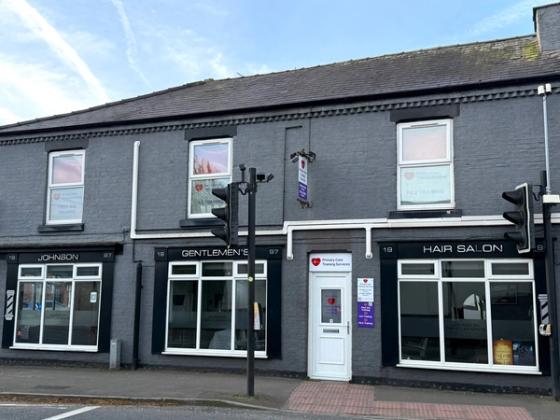
We are PCT Services, and we deliver CPD accredited Clinical Supervision training from our training centre at First Floor, 2 Queen Street in Northwich, about a 5 minute drive from Middlewich.
Why allied health professionals need supervision
Allied health practice is characterised by high autonomy and high complexity. You assess patients, design treatment plans, make clinical judgements, and manage therapeutic relationships, often without immediate access to a colleague from your own discipline to consult. A physiotherapist working alone in a community clinic may see 15 patients in a day, each presenting with a different problem, each requiring a tailored clinical response. A counsellor in private practice holds the emotional content of multiple clients' lives without the natural support of a team around them.
This autonomy is what makes allied health work rewarding, but it is also what makes supervision essential. Without a structured space to reflect, clinical practice can become routine, blind spots can develop, and the emotional toll of the work can accumulate without being processed. Over time, this leads to poorer clinical outcomes, reduced job satisfaction, and a higher risk of burnout.
Clinical supervision addresses all of these by providing regular, planned conversations with a trained supervisor. These conversations are not about being checked up on. They are about being supported to think deeply about your practice, to learn from your clinical experiences, and to develop as a professional in a way that ultimately benefits your patients.
What our course covers
Our Clinical Supervision course runs over two days and is CPD accredited, with a certificate valid for three years. Groups can be up to 20 people.
The course covers the theoretical foundations of supervision, including developmental models that recognise how supervision needs change as a practitioner gains experience, cyclical models that provide a repeatable framework for each session, and integrative approaches that can be adapted to different professional contexts.
The practical skills are the core of the course. Active listening at a level that goes beyond hearing words to understanding the clinical reasoning, emotional content, and professional development needs behind them. Reflective questioning that helps the supervisee explore their practice at depth rather than just describing what happened. Giving feedback that is honest, specific, and constructive. Contracting, the process of establishing clear expectations, boundaries, and confidentiality agreements at the start of a supervision relationship.
The ethical dimensions are addressed thoroughly. How to manage dual relationships when a supervisor is also a line manager. How to handle concerns about a supervisee's practice. Navigating confidentiality in a supervision context. Managing the boundaries between supervision, mentoring, coaching, and therapy. These are the areas where supervision relationships can become complicated, and the course equips you to handle them with clarity and confidence.
Who should attend
Experienced allied health professionals who want to provide supervision to colleagues or junior practitioners. This includes senior physiotherapists supervising more junior staff, experienced counsellors who want to offer clinical supervision to other therapists, and clinical leads who oversee multidisciplinary teams.
Allied health professionals who want to get more from their own supervision. Understanding supervision from the supervisor's perspective makes you a more reflective and engaged supervisee. You learn how to prepare for sessions, what questions to expect, and how to use the supervision space as a genuine development tool.
Practitioners in private practice who want to offer supervision as part of their professional services. For counsellors and therapists in particular, providing clinical supervision is a natural progression that contributes to the profession and can form part of your practice offering.
Anyone who wants to strengthen their CPD portfolio with accredited training in a skill that is valued across all allied health disciplines.
The value for Middlewich's allied health community
Middlewich's proximity to larger towns and cities means that many allied health professionals live locally but work across a wider area. They may work in isolation for much of the week, without the collegiate support that comes from working in a large department. Clinical supervision training creates the skills to establish supervision relationships that bridge this isolation, connecting professionals with the reflective support they need regardless of their working arrangements.
For private practitioners in particular, supervision training opens the door to providing supervision to other professionals. This is both a professional contribution and a business opportunity that allows experienced practitioners to diversify their practice and support the development of less experienced colleagues.
Practical details
The course runs over two days at our training centre at First Floor, 2 Queen Street in Northwich, about a 5 minute drive from Middlewich. We run scheduled courses throughout the year with live dates on our Clinical Supervision page.
For organisations or groups of allied health professionals who want to train together, we can discuss on-site delivery at a location that works for the group.

Clinical Supervision
This two day Clinical Supervision programme provides multidisciplinary professionals with the skills and knowledge to deliver clinical supervision effectively within the workplace. It is tailored to meet the regulatory requirements of NHS organisations and designed to incorporate individual Trusts local Clinical Supervision arrangements.
Book your place
If you are an allied health professional in the Middlewich area, check the upcoming dates on our Clinical Supervision page or give us a call on 07958 915146 to discuss your CPD needs. Clinical supervision is not just a professional requirement. It is the practice that keeps your practice strong.
Topics

Written by
Founder
- Registered Nurse / Specialist Practitioner Emergency Care
- Advanced Paediatric Life Support Instructor
- Immediate Life Support Instructor
- Independent Non Medical Prescriber
- Post Graduate Certificate in Education
I have practiced as a registered nurse for over 34 years, 29 within a senior nursing position within Emergency Care and as a part time lecturer at the University of Manchester. I am a Resuscitation Council (UK) and Advanced Life Support Group Instructor for Advanced Paediatric…
Read more about Jennie

